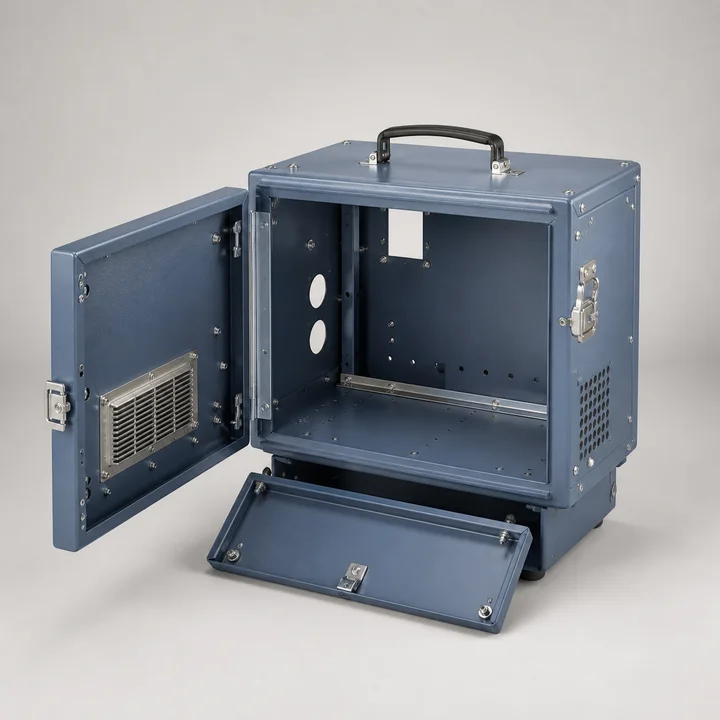
ClearWater builds portable analyzers that technicians carry to streams, wells, and treatment sites to test water quality on the spot. The instruments were reliable on the bench but fragile in the field — dropped tailgates, dusty trucks, and sudden weather were cracking housings and knocking connectors loose.
The field is unkind to instruments
A field analyzer lives a hard life: bounced around in a truck bed, set down on rocks, rained on, and grabbed by a technician wearing gloves. ClearWater's earlier plastic housings couldn't take it — cracked corners, flexing that stressed the boards, and ingress that fogged the display. Every damaged unit was a repair and a technician without a working tool.
They needed a case that protected the electronics through real field abuse without becoming a burden to carry.
Rugged but light
The tension in a portable instrument is always ruggedness versus weight. Formed aluminum sheet hits the sweet spot: far stiffer and more impact-resistant than plastic, but light enough to carry all day. Add a gasketed closure to keep out dust and splash, recessed connectors and controls so a drop lands on the case and not the ports, and integrated mounting for the internals.
It's a fabrication problem — the protection comes from how the sheet is formed and sealed.
The part we built
We formed the case from 1.5mm 5052-H32 aluminum for impact resistance and corrosion resistance, held features to ±0.40mm, and finished it in a durable blue-gray powder coat. The design recesses the connectors and display behind the case edges, seals the seams and door against dust and splash, and includes mounts for ClearWater's boards and battery. We build it turnkey to their BOM.
The result protects the instrument on a dropped tailgate while staying light enough for a full day of sampling.
A tool that survives the route
In the field conditions that had been cracking the plastic housings, the aluminum cases hold up — technicians can set them down hard, work in dust and weather, and the electronics stay protected and connected. Field damage returns dropped, and ClearWater's techs got a tool they could stop babying.
An instrument is only useful if it survives the trip to where it's needed. The case is what makes the electronics field-worthy.
“Our electronics were fine — they just kept getting smashed. The aluminum case made the instrument tough enough for the back of a truck.”
Dr. Emily Sato, Founder, ClearWater Field Labs